Hi, my name is Yaoqi Zhang and you can also call me Kevin. I’m from China. Now I am a student majored on the MSc International Business. My undergraduate degree is BSc Business Economics and Trade at University of Reading.
我的第一篇博文
做自己,因为别人都在做自己。
– Oscar Wilde
这是我新博客的第一篇文章。我刚开始写这个新博客,因此请继续关注。在下方订阅,以便在我更新新文章时您会收到通知。
Review
During this period of online learning, what impressed me most is the power of the combination of digital technologies and sharing. Individual’s interests and thoughts are limited and personal. While via online learning platforms and methods like MOOC, learners can share their views with others through reading and commenting others and writing their own blogs at any time and place, which is more efficient than most offline discussions. Under the push of digital technologies, everyone can be life-long learners and perform better in the fields they have interests in and professional pathway.
In terms of the first topic of blogpost, the impacts of the digital economy are imperceptible in some industries. The emerging of E-sport and related professionals attracted me since I found more and more game streamers appears and their videos were popular among young people. As one of the audience of such videos, I think the blogger’s worries about E-sport players’ job roles after their retirement are unnecessary. As more demand and favors from fans, E-sport will develop further and spawn other profitable and comprehensive industrial chains. The majority of E-sport players retire before their 30, which leave them much time to transform and restart. In China, some E-sport players have chosen to become game streamers after retirement, which is becoming a popular job role. Besides, I think self-service order kiosks are great in time saving but will not replace cashiers at least in the short time. Customers are various. Some of them may prefer self-service devices, and others may prefer to be served by real persons. If just focus on efficiency, self-service order kiosks in fast-food restaurants are favorable.
Referring to the second topic of blogpost, I found most emerging unicorn companies’ success are resulted from their digital business models. Zhongan’s success in Chinese insurance industry is a great example. Comparing with those traditional insurance companies like CPIC who has accumulated a large amount of users by offering traditional insurance products, Zhongan’s successful digital business model is creative. While whether its success can last as more and more traditional insurance companies offer similar type of products is unpredictable. Chinese Xiaomi, who develops fast in a short time is not just a imitator of Apple. Xiaomi focused on profits brought by software and Internet services instead of hardware. It adopts the mode of Free+Premium, which first encircle a large number of users with hardware that makes little or no money, and then provides paid software and value-added services. And the build of interactive community make their fans become the part of designing.
Appendixes:
1.Comments for the first blog post:
2.Comments for the second blog post :
2. 1. https://bemm129zoe.art.blog/
2. 2. https://songsong0824.design.blog/
3.Video Link: https://youtu.be/uyKd_GxBTEE
How Digital Business Model Enhances Netflix’s Success

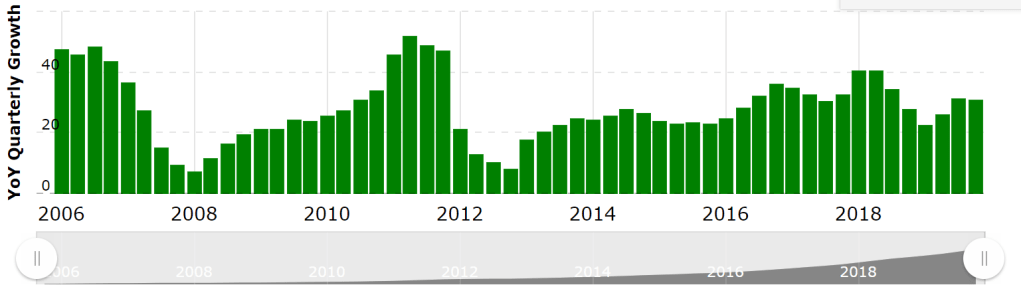
Netflix, founded in 1997 in America by Marc Randolph and Reed Hastings, is the global leading streaming entertainment service. With over 167 million paid memberships in over 190 countries, Netflix has seen substantial growth to its valuation, profits, reputation and user population continuously. Figures on Macrotrends showed that Netflix’s revenues rose 27.62% year-over-year (y-o-y) to 20.156 billion dollars in 2019. Forbes (2019) believed Netflix’s substantial international rise would continue despite facing fierce competitions from other content providers like Hulu.
Initially, at the start of its foundation, Netflix made its first money in the market by renting out DVDs by mails. In 1999, it debuted a subscription service, which offered unlimited DVD rentals for paid users with a relatively low price per month. Such service made Netflix gain over 200 thousand subscribers in the first year. With continuously accumulative members database combined with its forecasting on digital economy, Netflix formed its digital business model based on the digital technologies including Artificial Intelligence (AI) and Big Data Analysis (BDA) and evolved into a online service-based model which triggered its greater success in the later digital economy era (Marjoleign, 2019).
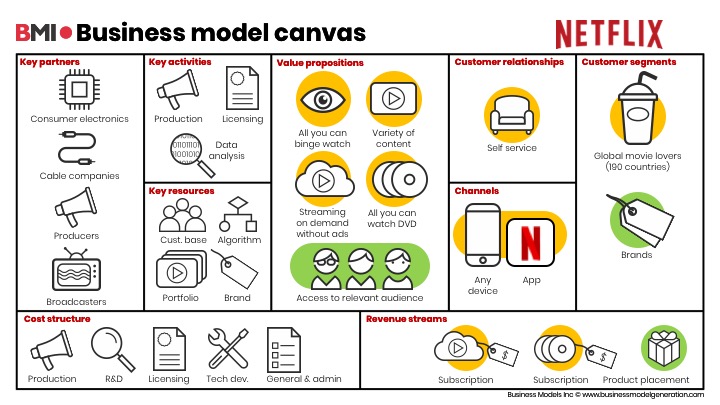
Actually, how Netflix’s digital business model facilitated its success can be summarized in three aspects. Firstly, recognizing the value of the digital asset and collecting user data. With increasing subscribers, Netflix had built an extensive members database.
Secondly, the use of AI and BDA finds data insight from data assets to judge users’ needs, which is also regarded as the critical point of Netflix’s successful digital transition. Based on tracking and analyzing users’ watching history, duration, viewing behaviours including pause, fast forward and playback and individual ratings of episodes, searching history, and comments, users’ needs and preferences are predictable. If a subscriber shows preference to an exact topic, Netflix can recommend other related videos for himself, and such service performed better and more efficient outweigh self-searching. For me, its recommendations are positive and being a part of my viewing habits. I have found numerous videos that I favours among them. Nowadays, I prefer to select from its recommendations first instead of searching by myself while using Netflix.
Finally, the logic of the subscriber economy shifted the focus of the business model from selling goods to services and experience. Through this method, greater relationships and loyalty with customers replaced once simple transactions. A simple definition is a business model in which a well-run business can lock in 70% of its revenues at the start of each year because at least 70% of its subscribers will continue to pay for its services in the New Year. The economic logic of subscribers is not a new concept. Newspapers and magazines have been relying on their subscribers for more than a century, and HBO, a cable movie channel that does not run any commercials at all, gets most of its revenue from subscribers. Understanding subscribers, locking in subscribers, and enhancing subscriber stickiness have become the most important relationships in the business model of the subscriber economy.
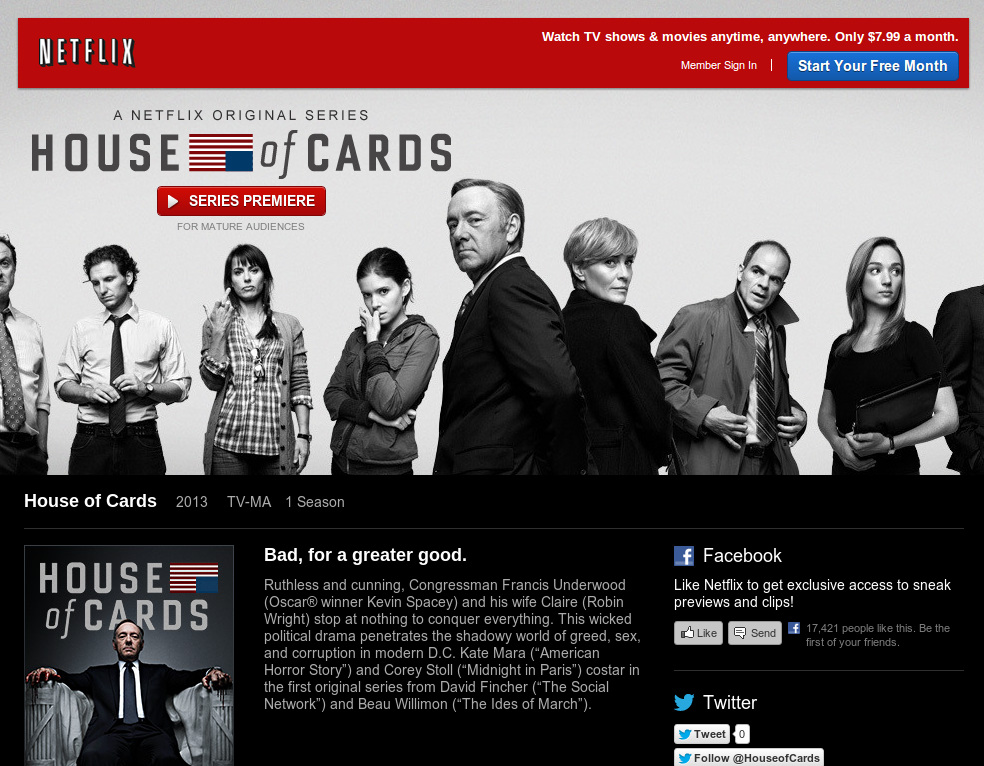
The success of filming House of Cards can also be viewed as the epitome of Netflix’s successful digital business model. After analyzing the viewing habits of a large number of users, it was found that a large number of users liked the original BBC series House of Cards (the American version of House of Cards is a remake of the BBC series), and many users watched the series over and over again, and could not stop watching it. These behaviours in Netflix’s view are the direct expression of users’ preferences. In a related development, Netflix has found that fans of the BBC version of House of Cards are also keen on movies starring actor Kevin Spacey and are keen on director David Fincher of the Social Network. With big data and algorithms to tease out the scripts, actors and directors that viewers approve of, Netflix’s top brass decided that a show packed with all three was worth a bet and that it was a big bet. Apparently, Netflix’s gamble has been a commercial success and an artistic coup for critics. Thanks to House of Cards, Netflix earned multiple Emmy nominations in just six months, eventually taking home an Emmy and a golden globe. By contrast, HBO waited 25 years for its first Emmy nomination.
References:
Great Speculations. (2019). A Closer Look At Netflix’s Valuation. Forbes. Retrieved on 4th March 2020 from: https://www.forbes.com/sites/greatspeculations/2019/03/26/a-closer-look-at-netflixs-valuation-2/#17c6231028c7
Marjoleign., O. (2018). Netflix: How a DVD rental company changed the way we spend our free time. BMI. Retrieved on 4th March 2020 from: https://www.businessmodelsinc.com/exponential-business-model/netflix/
Netflix Media Center. (2020). Retrieved on 4th March 2020 from: https://media.netflix.com/en/about-netflix
Netflix Revenue 2006-2019 | NFLX. Macrotrends. Retrieved on 4th March 2020 from: https://www.macrotrends.net/stocks/charts/NFLX/netflix/revenue
The Changing Role of Human Resources Professionals in The Digital Economy
With the fourth industrial revolution, the contemporary global economy has entered the digital era. In such period of digitalization and intelligence, new technologies such as mobile communications, Internet of things, cloud computing, big data and artificial intelligence have made the relationship between human resources and organizations and relationship between real and virtual economy getting more and more interconnected. More virtual organizations began to emerge, and the working model of online collaboration became the norm. The organizational structure tended to be flatter and more decentralized. Under such circumstance, traditional corporate human resource management mode is hard to adapt and cope with, which requires the changes and innovation of human resource management system.
In the digital economy, organizations are operating in a dynamic and customer-orientation environment with uncertain, flexible and continuously changing work. With convenient mobile devices, talents can work in the cloud instead of a fixed and real workplace at any time to satisfy their customers’ needs. The increasing number of new technologies are applied into practical work, which requires talents can equip more skills with themselves and keep learning in practice. In order to manage collective human resources better, the HR department has changed in four aspects: hiring, using, training and retaining.
Firstly, in terms of hiring talents in the digital economy, social networks are regarded as a vital channel to discover new talents and enlarge professional networks for HR professionals. Surprisingly, 31% of hires come from social networks (Perez, 2015). Moreover, compared to traditional time-costly screening and face-to-face interviews taken by HR professionals, with the help of big data analysis, AI and convenient mobile devices, resumes are screened by advanced systems automatically. And interviews are more flexible and time-saving with online apps. Furthermore, some companies even use AI to interview talents online, and HR professionals are arranged to interview several excellent candidates and decide the final option.
Secondly, referring to the arrangement of talents after recruitment in the digital economy, the emerging share economy and flexible work facilitate the emergence of freelance jobs and contractual employment. In this way, their pay is based on each task they take, and they have freer work time arrangement. HR professionals can contact them through online social apps and Skype to interact with them regularly and supervise them. For instance, in the Uber, once the contractual drivers are on-boarded, the HR professionals interact with them through the App based and virtual interfaces rather than meeting them in person (Juneja, 2015).
Thirdly, while training human resources in the digital economy, the relationship between people and organizations has become a mutually beneficial symbiosis mode. Human resources are not dependent on the organization, but actively respond to and realize customers’ needs to achieve individual development and organizational development. The organization offer opportunities for talents to promote their self-study ability.
Finally, in order to retain talents for the organization in the digital economy, continuous mutual benefits mechanism and transparent benefit-sharing mechanism are more attractive than traditional salary incentives, career management or organizational culture under dramatic adjustments of the relationship between human resources and organizations. Long-term mutually beneficial cooperation between talents and organizations is required for HR professionals’ maintaining.
In the digital economy, on the one hand, advanced technology support reduces the workload of HR professionals. On the other hand, the emergence of the virtual economy and new work choice redefine relationships between HR and organizations which require HR professionals to adapt and adjust to cope with changing internal and external environment.
In the future, HR professionals are facing challenges to cope with pension and insurance or those freelance talents. A new social contract between organizations and cooperative talents is required to maintain a long-time mutually beneficial connection. Moreover, Chytiri (2019) argued that HR professionals are supposed to implement new HR strategies to promote loyalty and engagement, cope with diversity and retain digital talents. He believed HR professionals were necessary to acquire primary skills to access, analyze, assess and share information. He also illustrated that using digital technology to store and evaluate talents’ personal information needed to be considered critically from the perspective of ethics. However, Fenech, Baguant and Ivanov (2019) advised HR professionals to take full use of stored human resource data to formulate and implement strategies. Notably, digitalization has become an unstoppable trend. HR professionals are supposed to adapt changes resulted from the emerging digital economy and adjust their strategy gradually.
References:
Chytiri, A. P. (2019). Human Resource professionals’ Role in the Digital Era. SPOUDAI Journal of Economics and Business, Vol.69 (2019), Issue 1-2, pp. 62-72
Fenech, R., Baguant, P., & Ivanov, D. (2019). The changing role of human resource management in an era of digital transformation. Journal of Management Information and Decision Sciences, 22(2), 166-175.
Juneja, P. (2015). Human Resource Management in the Times of Emerging Digital Economy. Management Study Guide. Retrieved on 13th February 2020 from: https://www.managementstudyguide.com/human-resource-management-in-times-of-emerging-digital-economy.htm
Pérez, C. P. (2015). 6 HR Trends in the new digital economy. Retrieved on 13th February 2020 from: https://www.glocalthinking.com/en/6-hr-trends-in-the-new-digital-economy
自我介绍(示例文章)
这是一篇示例文章,最初作为 Blogging University 的组成部分发布。报名参加我们十个项目中的其中一个,立即开始撰写您的博客。
您今天要发布一篇文章。不必担心您的博客的外观。如果您还没有给博客命名或是感到不知所措,也不必担心。只需点击“新文章”按钮,告诉我们您来此处的原因。
为什么要这样做?
- 因为它能为新读者提供背景信息。让他们了解您是做什么的,他们为什么应该阅读您的博客。
- 因为这将帮助您专注于自己对博客的想法,以及您想用博客来做什么。
文章可短可长,可以是对您的生活的个性化介绍或是博客宗旨说明,也可以是对未来的宣言或是对希望发布的内容类型的简要概述。
为了帮助您开始撰写,不妨思考以下几个问题:
- 您为什么要公开写博客,而不是写个人日记?
- 您认为您会写些什么话题?
- 您想通过博客和谁联系?
- 如果您的博客成功写到明年,您想要达到什么目标?
您并非一定要受此限制,博客的一个奇妙之处在于,随着我们学习、成长和与他人互动,它们是会不断演变的,不过如果知道从何处入手以及为何开始,这将会颇有益处,并且明确您的目标可能会激发您写其他一些文章的灵感。
不知道如何开始?只需写下您脑海中闪现的第一件事即可。Anne Lamott 是一位作家,大家都喜欢她写的书。她指出,你要允许自己写出“蹩脚的初稿”。Anne 提出了一个很好的观点,先开始写,之后再去考虑如何编辑。
在您准备发布时,给您的文章贴上三到五个标签来描述您博客的关注点 – 写作、摄影、小说、育儿、美食、汽车、电影、体育等。这些标签将帮助关注您话题的人在阅读器中找到您。确保添加“zerotohero”标签,这样其他新博主也可以找到您。
 站点标题
站点标题 